
Corrugated collar inserts vs foam inserts for candle jar boxes: which protects better?
Short answer: Choose die-cut E-flute corrugated collar inserts for 8 oz mason jars, 9 oz tumblers, and 3-wick jars when you want flat-shipping, curbside-recyclable parcel protection starting at 1,000 units. Choose custom EVA foam inserts inside custom candle jar boxes for heavy ceramic vessels and rigid gift sets starting at 50 boxes.
On this page
- How do corrugated collar inserts and EVA foam inserts compare side by side
- How do E-flute rim collars and stepped cradles stop glass jars from cracking
- When should I upgrade to custom EVA foam inserts for candle jar boxes
- How do corrugated collars and foam inserts affect packing time and storage
- How much extra width and height do both inserts add to a candle jar box
- Common mistakes
- FAQs
Request a custom quoteFree dieline & 3D mockup
Both corrugated collar inserts and custom EVA foam inserts prevent glass and ceramic candle jars from cracking by holding the vessel away from the outer carton walls, but they work through different mechanics. A die-cut E-flute corrugated neck ring and stepped base cradle suspend your jar across a 0.25-inch air gap so parcel drop energy crushes the sacrificial paper flutes instead of the glass lip or weighted bottom sham. Corrugated inserts ship completely flat, print with your exact Pantone interior color, and go straight into curbside paper recycling. Die-cut EVA foam inserts use closed-cell polymer cushioning that rebounds after repeated impacts and grips heavy stone, marble, or irregular blown-glass vessels alongside brass wick trimmers without folding scores. At CubitPack, folding and corrugated jar boxes with card or flute inserts start at 1,000 units, while rigid boxes with foam start at 50 units.
How do corrugated collar inserts and EVA foam inserts compare side by side?
When a glass candle jar cracks during parcel shipping or boutique restocking, the break almost always starts at one of two stress points: the thin 2.5 mm upper glass rim where the lid sits, or the outer edge of the heavy bottom sham where 60 percent of the glass mass is concentrated. Leaving zero air space between those two glass rings and the outer folding carton transfers every drop impact straight into the vessel. When you order custom printed candle jar boxes, our structural team builds either folding corrugated and paperboard inserts or custom-cut EVA foam cavities tailored to your exact jar profile. Use the table below to compare both insert systems across shock absorption, unboxing look, flat storage space, and order minimums.
| Insert feature | E-flute corrugated collar & cradle | Die-cut EVA foam cavity insert |
|---|---|---|
| Best vessel types | 8 oz mason, 9 oz tumbler, 12 oz rocks & 3-wick glass jars | Heavy ceramic, marble, blown-glass & multi-piece gift sets |
| Shock protection method | 0.25 in air-gap suspension + sacrificial flute crush zone | Dense closed-cell foam rebounds after repeated drops |
| Custom printing & color | Full CMYK or Pantone print, matte/soft-touch or brown kraft | Solid charcoal black or clean white foam (+ optional card velvet top) |
| Warehouse storage footprint | Ships 100% flat; folds into place during candle packing | Ships at full thickness (0.5 in to 2.0 in deep trays) |
| Curbside disposal | Paper-stream recyclable with the outer carton | Non-paper polymer cushion kept for storage or display |
| Accessory slots (matches, trimmers) | Requires folded multi-cell compartments | Cleanly die-cuts exact silhouettes for wick trimmers & snuffer |
| Typical CubitPack minimum | 1,000 units (with folding or corrugated boxes) | 50 units (with rigid boxes) or 1,000 units |
How do E-flute rim collars and stepped cradles stop glass jars from cracking?
Glass is remarkably strong under vertical compression, which is why pallets of filled candle jars can stack high in a warehouse, but glass is brittle when struck sharply on its side wall or top lip. A single-wall paperboard carton hugs the glass wall tightly; if a courier drops the parcel on a corner, the impact passes straight through the 0.020-inch board into the glass cylinder. Adding a die-cut custom cardboard insert made of 1/16-inch E-flute corrugated board changes the physics completely. A top neck ring slips over the upper rim of your 8 oz mason jar or 9 oz straight tumbler and folds four side wings outward against the inside walls of the carton, creating a 0.25-inch empty air moat around the entire glass body. On tapered 11 oz and 12 oz rocks glasses, we pair that top neck ring with a stepped bottom floor cradle cut to the narrower base diameter so neither the top lip nor the heavy bottom sham can touch the outer box.
- Top rim collar ring: centers the upper lip of straight-sided 9 oz tumblers and pins the wood or metal dust lid in place.
- Stepped bottom well: locks the narrower base of flared or tapered rocks glasses so the bottom cannot pendulum into the corners.
- Full-height U-sleeve liner: wraps under the jar base and up two opposite walls to double vertical stacking strength.
- Six-cell wholesale divider: separates six 8 oz or 9 oz jars inside a master case for Faire and boutique wholesale shipments.
When should I upgrade to custom EVA foam inserts for candle jar boxes?
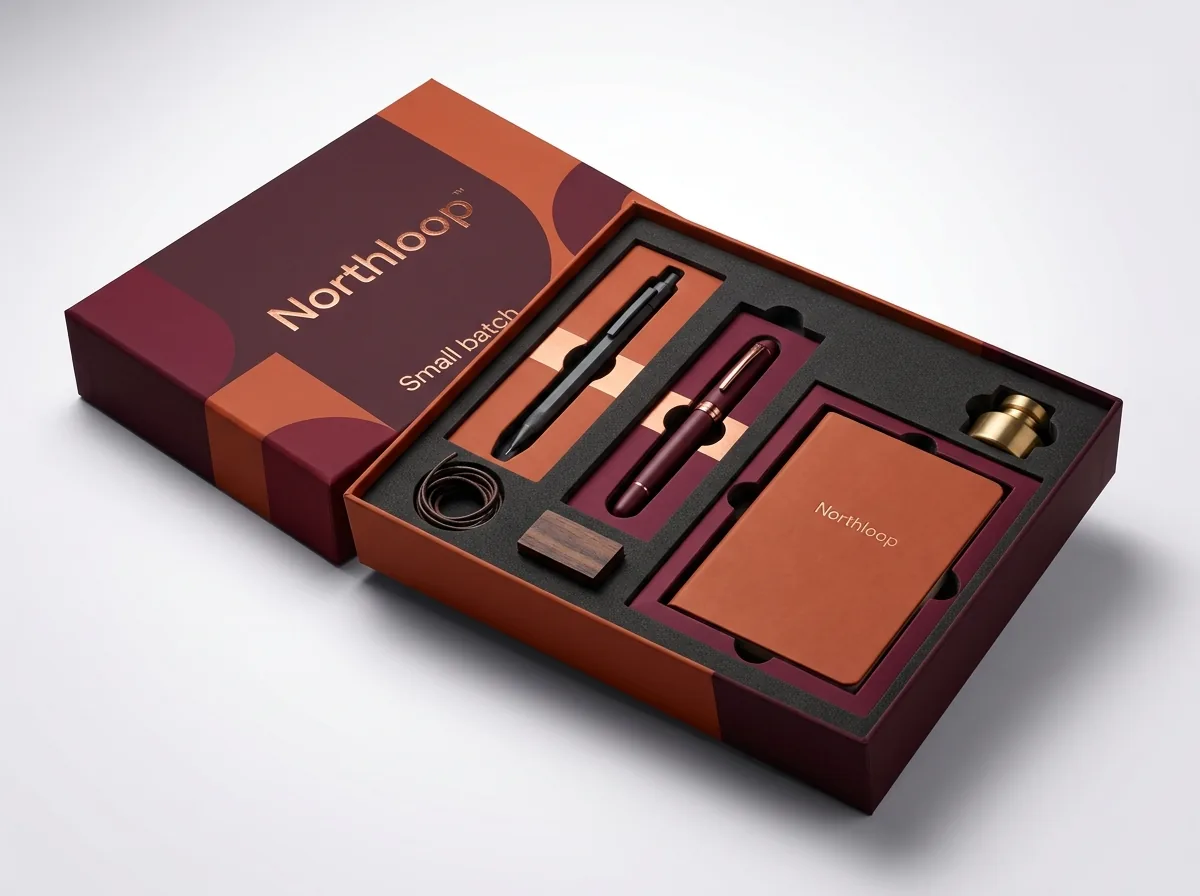
While E-flute corrugated collars handle 90 percent of retail and e-commerce glass candle tumblers, three scenarios call for custom EVA foam inserts. First, thick-walled ceramic, concrete, alabaster, and hand-blown glass vessels weighing 2 to 4 pounds vary slightly in outer diameter from piece to piece; flexible closed-cell EVA foam compresses by 1 to 2 millimeters to grip handmade vessels snugly without scratching matte glazes. Second, when you build a holiday gift box or PR mailer that pairs a 9 oz candle jar with a long brass wick trimmer, a bell snuffer, and a glass cloche match bottle, die-cutting contoured pockets into a solid block of charcoal or white EVA foam holds every metal tool flush in its own silhouette. Third, if you are launching a reserve candle in 50-unit minimum custom rigid boxes, pre-fitted EVA foam wells require zero hand-folding at your pouring studio.
Know your size? Compare pricing across up to 3 quantities.
Request a Quote →How do corrugated collars and foam inserts affect packing time and storage?
If you pour and pack thousands of candles in a compact studio or 3PL warehouse, flat storage volume and assembly seconds per unit matter almost as much as drop protection. One thousand flat-die-cut E-flute neck collars stack into a couple of compact master cartons under a worktable. During packing, your team folds the four pre-scored side flaps down at 90 degrees and drops the ring over the jar neck in about four seconds. EVA foam inserts arrive pre-laminated to their full 1.0-inch to 2.5-inch depth. That means zero folding time on the packing line (you simply press the foam block into the base tray and drop the candle vessel into the round cavity), though 1,000 foam inserts occupy several pallet spaces in storage. Many brands therefore use flat-shipping E-flute collars for their year-round 1,000-unit core tumbler line and reserve EVA foam for 50-to-250-unit rigid gift editions.
How much extra width and height do both inserts add to a candle jar box?
Whether you choose a folded E-flute collar or a die-cut EVA foam tray, the insert sits between your glass jar and the outer carton walls, which increases the required inside dimensions of the box. For a folded E-flute corrugated neck collar or full fluted liner around a 9 oz straight-sided tumbler (2.9 inches wide by 3.5 inches tall), add 0.375 to 0.5 inches to both the Length and Width, bringing a snug 3.125-inch retail carton up to 3.75 × 3.75 × 4.25 inches. For a die-cut EVA foam insert inside a two-piece rigid box or corrugated mailer, leave a minimum foam wall thickness of 0.375 to 0.5 inches on all four sides of the round jar cutout so the foam ring stays rigid. That adds 0.75 to 1.0 inch to your jar's diameter.
- Snug paperboard retail carton (no insert): Jar diameter + 0.125 to 0.1875 in.
- E-flute neck collar or fluted sleeve: Jar diameter + 0.375 to 0.5 in (gives a 3/16 to 1/4 in air gap per side).
- EVA foam cavity insert: Jar diameter + 0.75 to 1.0 in (gives a 3/8 to 1/2 in foam wall per side).
- Finger-pull notches: two 0.625 in half-moon thumb cutouts on opposite sides of the jar well.
What are the most common candle jar insert mistakes?
Loose jars, scratched ceramic glazes, and impossible-to-remove tumblers come from overlooking insert wall allowances or finger access. Avoid these five mistakes
- Sizing the outer box to the bare glass jar diameter and forgetting to add 0.5 inches for an E-flute collar or 0.75 inches for EVA foam.
- Using only a flat bottom pad without a top neck collar, which lets the upper rim of the glass jar slam into the side walls if the box tips.
- Cutting a tight round foam or cardboard cavity with zero thumb-notch cutouts, trapping a heavy 12 oz jar inside the base.
- Making the outer wall of an EVA foam insert thinner than 0.375 inches, causing the foam rim to tear or collapse during packing.
- Using a straight cylindrical collar on a tapered rocks glass without a stepped bottom well to lock the narrow sham.
Find your size
Suggested inside size: 2.5 × 2.5 × 3 in
A starting point. Your account manager confirms the size with you before the proof.
Quote this size →Packaging for this

Ready to order candle jar boxes? Compare up to 3 quantities with a free 3D mockup.
Request a Quote →Questions about candle jar boxes
Does CubitPack charge die fees for custom candle jar inserts and finger notches?
No. CubitPack never charges cutting die or printing plate fees on boxes or internal inserts. Whether your jar needs a stepped E-flute base cradle, a top rim collar with thumb notches, or a multi-cavity EVA foam tray for a jar and wick trimmer, tooling is free.
Can I order a corrugated collar insert inside a folding paperboard candle jar box?
Yes. Pairing a smooth soft-touch or foil-stamped folding paperboard auto lock carton on the outside with an E-flute corrugated neck collar on the inside is our most popular setup for 8 oz and 9 oz retail candle jars that also ship online.
Can we print our brand color on the corrugated candle jar insert?
Yes. We can flood-coat or Pantone-print the visible deck of your paperboard or E-flute neck collar to match your outer carton or inside lid, or leave it in natural brown kraft to complement amber apothecary jars.
What is the minimum order for candle jar boxes with corrugated or foam inserts?
Folding paperboard and corrugated candle jar boxes with cardboard or E-flute inserts start at 1,000 sets. Luxury two-piece, drawer, and magnetic closure rigid candle boxes with custom EVA foam inserts start at just 50 sets.
Will E-flute corrugated inserts scratch matte-painted or frosted glass candle jars?
To protect delicate matte-sprayed glass or satin ceramic glazes against paper rub during long parcel rides, we can apply a smooth matte or soft-touch lamination to the contact face of the card collar, or switch to non-abrasive EVA foam.
Can I drop-test a sample box and insert with my own poured candle jar first?
Yes. Every order includes a free 2D dieline proof and 3D mockup before payment, and you can order a paid physical prototype of your box and insert (with its cost credited to your full order) to run a real table-drop test with your filled vessel.
Still have a question? Ask a packaging specialist.
Request a Quote →Request your candle jar boxes quote
Tell us your size and quantities, and one dedicated account manager prepares pricing for each tier.
- Free design & AI-to-print studio + 3D mockup
- No die or plate charges · 4–5 day rush available
- Free shipping to all 50 states
- 10% off your first order
The insert comparisons and wall-clearance formulas in this guide are based on CubitPack's decided policies in our published product specifications and standard parcel drop-protection principles for 8 oz to 16 oz glass and ceramic candle vessels. A CubitPack packaging specialist reviewed every section. Spot an error? Tell us and we will fix it.
Sources
What changed
- October 22, 2026: First published.
- October 22, 2026: Updated specifications, terminology, and verified source links.
More guides
New packaging guides by email
Sizes, materials and design tips. Unsubscribe anytime.