
How do I line and design custom flower boxes for fresh stems and floral foam?
Short answer: Never place wet floral foam or standing water directly against bare paperboard. Instead, pair custom flower boxes with a drop-in rigid plastic liner cup, double-folded florist cellophane or individual stem hydration tubes, and finish the outer box wrap with matte, gloss or soft-touch film lamination that shrugs off mist droplets.
On this page
- What are the best ways to waterproof the inside of a custom flower box
- Which outer laminations resist water droplets and floral cooler condensation
- How do you reinforce ribbon handles for heavy wet-foam arrangements
- Where should I place my logo and foil stamping on a hat box
- How can florists keep custom flower box costs down across holiday seasons
- Common mistakes
- FAQs
Request a custom quoteFree dieline & 3D mockup
Fresh-cut flowers bring water, high cooler humidity and heavy saturated foam into direct contact with paper packaging. A single soaked phenolic foam brick weighs over 4 pounds and will wick moisture through unlined chipboard (gray board) seams within an hour if no barrier sits between the foam and the box wall. Professional floral studios protect their packaging in three layers: an internal waterproof containment method (a molded plastic pot liner, heavy gauge cellophane sheet, or capped stem water tubes), a laminated exterior wrap paper that wipes dry on a wet workbench, and reinforced metal-eyelet ribbon handles that support the wet weight during hand delivery. When you design custom printed flower boxes with CubitPack, our design team sizes the box cavity around your exact liner cup or tube layout starting at 50 rigid units, with free design help and no die charges.
What are the best ways to waterproof the inside of a custom flower box?
Even when the inside of a rigid box is laminated, the corner joints and bottom disc seams are joined with adhesive over cut chipboard (gray board) edges. Standing water will eventually find any unsealed paper edge. That is why every fresh floral arrangement needs a one-piece internal barrier that holds 100% of the water reservoir. Depending on whether you build domed hat-box arrangements, hand-tied market bouquets or flat long-stem rose boxes, choose one of the four containment setups in the table below. Matching your box dimensions to the liner before you print guarantees the plastic lip stays completely hidden below the rose canopy. If your studio uses standard 5-inch, 6-inch or 8-inch nursery pot liners, send us the exact rim diameter and vertical height of your liner pot so our dieline team can build the rigid box cavity with a snug ⅛ inch slip clearance on all sides.
| Waterproofing setup | Best floral application | How to size & prep the box |
|---|---|---|
| Drop-in rigid plastic liner cup | Hat-box domes built in wet floral foam or chicken wire | Size box inside width ⅛ in wider than the plastic pot rim; add centering collar if square |
| Double-layer florist cellophane | Odd-shaped rectangular boxes or shallow floral trays | Line cavity with two crossed sheets of 1.5 mil clear or matte film trimmed ½ in below rim |
| Individual stem water tubes | Long-stem presentation roses & flat letterbox flowers | Score a die-cut cardboard stem bridge with slots that hide the green or clear water vials |
| Hydration wrap pouch + collar | Overnight e-commerce hand-tied bouquets | Wrap stem bases in wet floral sponge + barrier bag; lock bouquet waist with corrugated collar |
| Dry die-cut cardboard / EVA grid | Preserved eternity roses & dried pampas/botanicals | Zero water needed; keep humidity out with a clear window lid or matte laminated wrap |
Which outer laminations resist water droplets and floral cooler condensation?
Inside a floral studio, boxes get splashed at the sink, misted with finishing spray, and moved in and out of 36°F walk-in coolers where condensation forms on cold surfaces. Uncoated dyed papers absorb water droplets immediately, leaving dark rings or blistered spots next to your logo. Applying a thin polypropylene film lamination over the printed wrap paper seals the exterior surface so stray droplets bead up and wipe off with a towel. You can choose matte lamination for a clean modern look, soft-touch lamination for a velvety petal-like texture that hides fingerprints on dark black or burgundy boxes, or gloss lamination for high shine. If you prefer the organic texture of unlaminated kraft board for dried wildflowers or market carry-out, pair it with a darker ink palette and keep wet misting away from the box until the bouquet is seated.
How do you reinforce ribbon handles for heavy wet-foam arrangements?
A dry preserved rose box weighs less than a pound, so almost any decorative ribbon tie can carry it. A fresh 8-inch or 10-inch hat box holding a water-logged foam brick and two dozen roses can easily weigh 5 to 8 pounds. If carry cords are threaded through plain unreinforced slits in the wall, the wet weight can pull the knot through the board or bow the side walls inward. For fresh arrangements carried by hand, specify 2 mm to 2.5 mm high-density rigid chipboard (gray board) and reinforce the cord holes with flared metal eyelets (grommets) in gold, silver, rose gold or matte black. Instead of tying a tiny single knot inside the wall, our assembly team can flatten and glue a 1.5 inch tail of wide grosgrain or satin ribbon behind an interiorreinforcement washer, distributing the pull load across a broader area of the chipboard (gray board) core.
- Board thickness: use 2 mm (approx. 80 pt) or thicker rigid chipboard (gray board) on fresh-flower boxes 8 inches and wider.
- Metal eyelets: crimp brass, nickel or matte-painted eyelets into the cord holes to stop wet-load tearing.
- Handle placement: mount ribbon holes 1.25 inches below the top rim so the lid can still sit underneath the base or close above the cords.
- Cord length: allow an 18 to 22 inch loop drop so tall domed bouquets clear the customer's hand when carried.
Know your size? Compare pricing across up to 3 quantities.
Request a Quote →Where should I place my logo and foil stamping on a hat box?
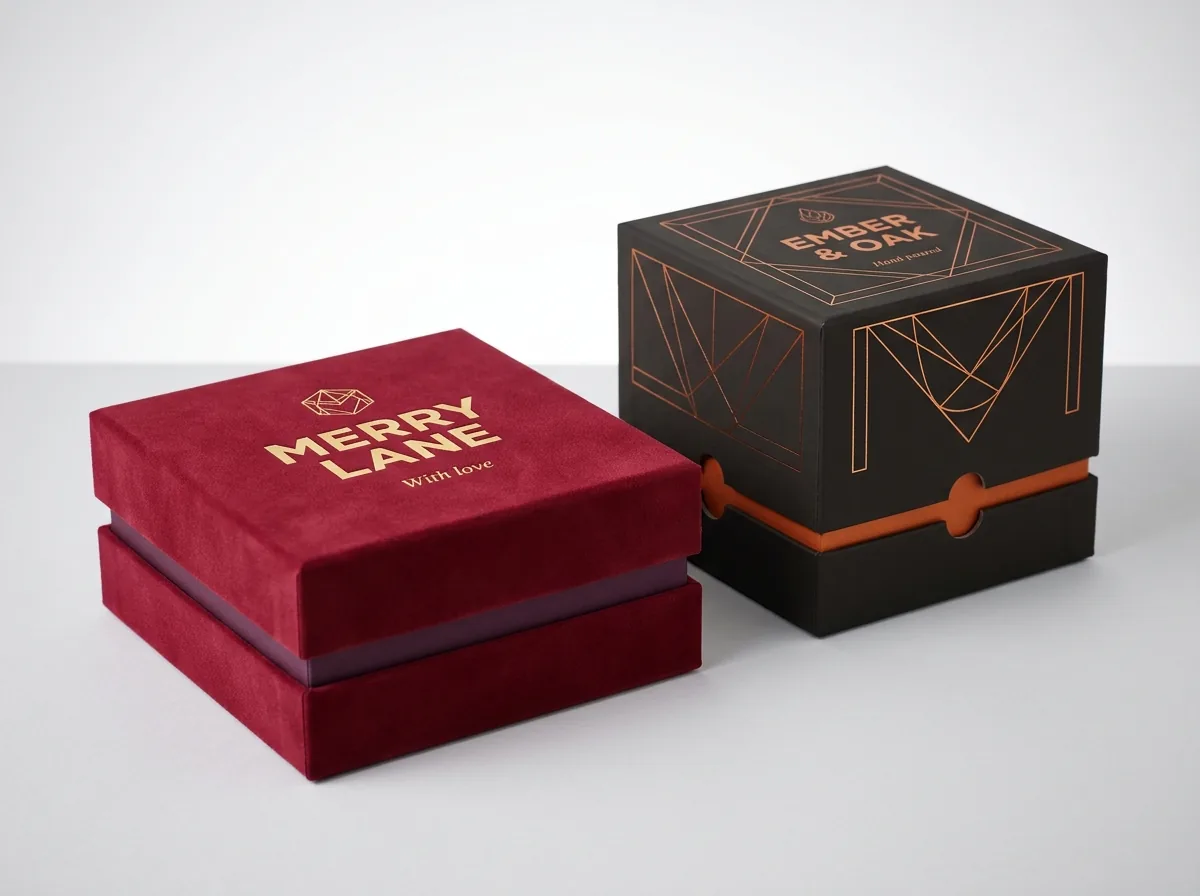
One detail many first-time floral buyers overlook is what happens to the lid once the flowers are arranged. On a tall domed bouquet where roses crown 3 to 5 inches above the box rim, the lid cannot sit on top of the flowers. Florists either nest the base inside the upturned lid like a pedestal saucer, or tuck the lid underneath the bottom of the box so the customer keeps both pieces together. Because the lid often sits at the bottom or stays in the studio, never put your only brand mark on the top center of the lid. Always stamp or print your primary crest on the front vertical wall of the box base (centered slightly above the midpoint so a low-hanging leaf or petal does not cover it), and add a secondary wordmark along the side skirt of the lid. Adding foil stamping in metallic gold, rose gold or silver over matte wrap paper gives high contrast in customer photos without needing a busy multi-color print.
How can florists keep custom flower box costs down across holiday seasons?
Floral demand spikes sharply around Valentine's Day, Mother's Day, graduation season and the December holidays. Ordering a separate custom-printed rigid box for every single holiday can tie up budget and shelf space in leftover seasonal inventory. The smartest strategy is to print your core custom flower boxes in a timeless year-round colorway (such as warm ivory, matte black, sage green or blush with your foil crest) and dress the box for each holiday using low-minimum accessories. Swap in red velvet or burgundy satin ribbons for February, pastel botanical belly bands or custom thank you cards for Mother's Day, and pine-and-gold custom seal stickers for Christmas. Because CubitPack charges no die or plate fees and offers 10% off your first order, you can start with 50 rigid boxes and scale up as your studio grows. When you standardize on two or three core hat-box diameters or square footprints across the calendar year, your floral designers can also stock a single matching size of plastic pot liners, cellophane sheets and EVA stem grids. That consistency cuts prep time on busy holiday mornings when dozens of courier orders leave the workbench every hour.
What are the most common flower box lining and design mistakes?
Most damaged floral boxes come from water wicking into raw paper edges or logos hidden behind foliage. Check these five details before approving your proof
- Setting wet floral foam directly into a rigid box without a plastic liner cup or double cellophane barrier.
- Choosing unlaminated porous paper wraps for fresh-cut cooler arrangements where condensation and mister spray leave water spots.
- Stamping your studio logo only on the top lid when domed arrangements force the lid to sit underneath the base.
- Placing the front wall logo too close to the top rim where overhanging eucalyptus, hydrangea or garden rose petals hide it.
- Threading narrow ribbons through unreinforced punch holes on large boxes that hold 5+ pounds of wet floral foam.
Find your size
Suggested inside size: 4 × 4 × 4.5 in
A starting point. Your account manager confirms the size with you before the proof.
Quote this size →Packaging for this
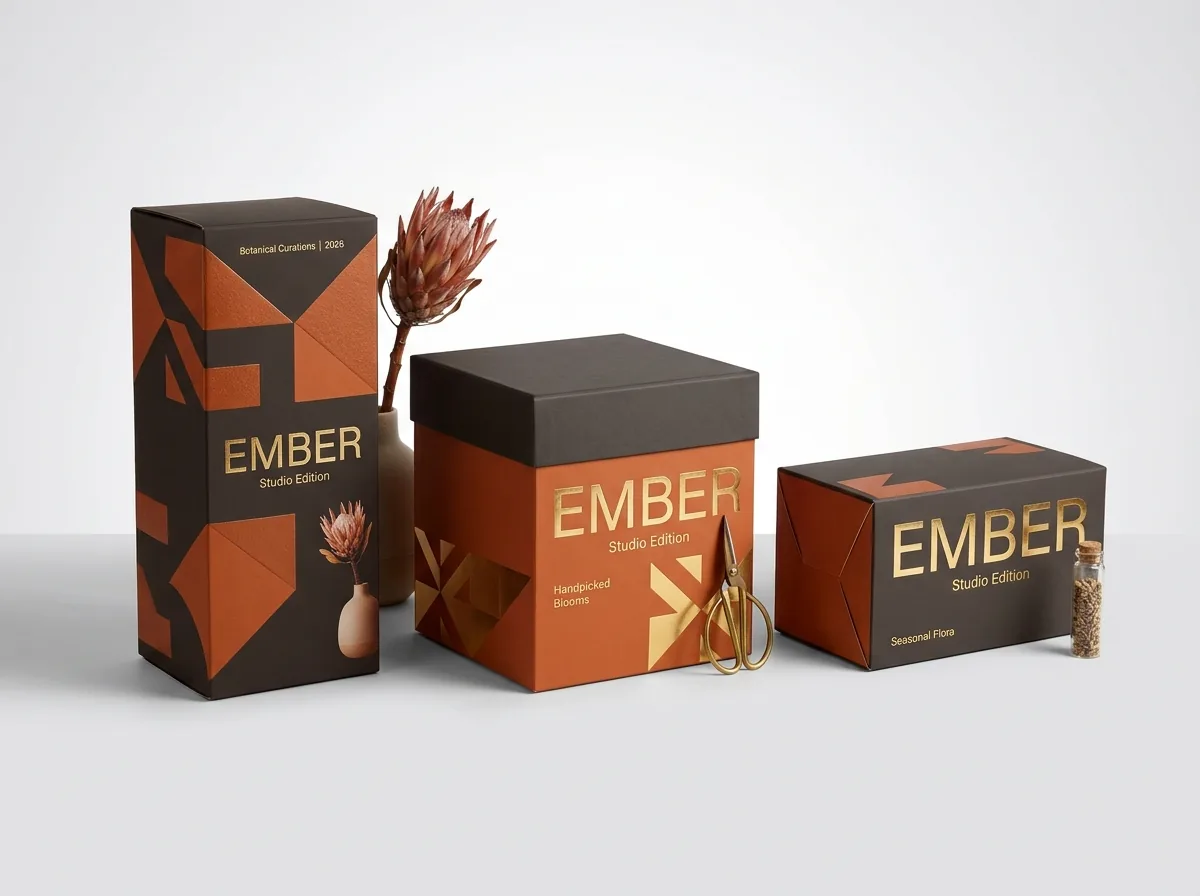
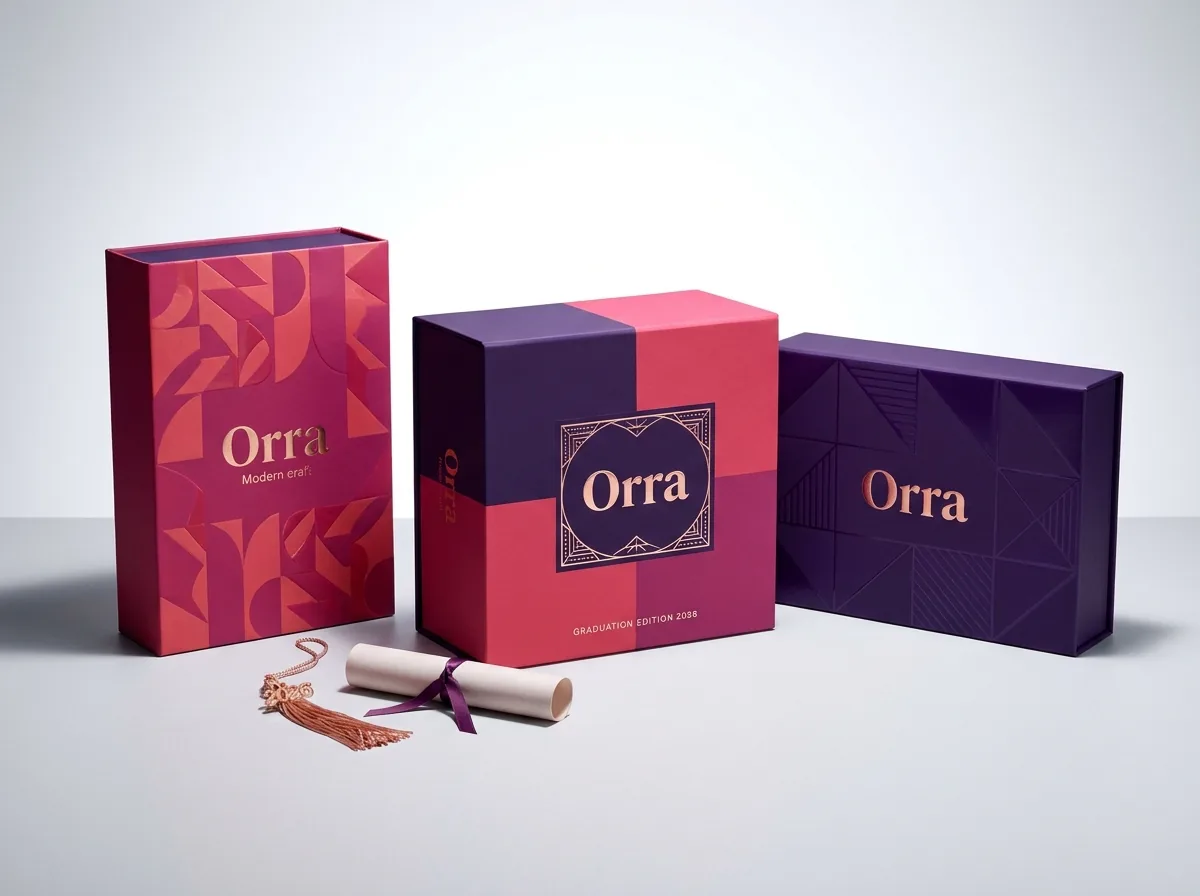
Ready to order flower boxes? Compare up to 3 quantities with a free 3D mockup.
Request a Quote →Questions about flower boxes
Can CubitPack laminate both the outside and the inside of a flower box?
Yes. We can apply matte, gloss or soft-touch film lamination to the exterior wrap paper and also laminate the interior liner paper so condensation and stray water droplets wipe off cleanly. For standing water or wet floral foam, still use a drop-in plastic pot liner.
How do I make sure my plastic pot liner fits inside my custom flower box?
Measure the outside diameter of your plastic liner cup at its widest top lip and the total vertical height of the cup. Give us those exact measurements and our structural team will add ⅛ inch of lateral clearance and a centering ring if needed.
Does hot foil stamping peel or tarnish in a humid floral cooler?
No. Hot foil stamping is heat-pressed into the laminated wrap paper and cured permanently, so walk-in floral cooler humidity and light water mist will not make metallic gold, rose gold or silver foil peel or run.
Can I order custom flower boxes with my AI-generated floral pattern?
Yes. If you created a botanical pattern or emblem with an AI image tool, send the file with your quote request. Our prepress designers upscale the resolution, convert colors to CMYK or Pantone, and wrap it onto your 3D mockup for free.
What is the best ribbon width for carrying a fresh hat-box bouquet?
A ⅝ inch to 1 inch (15 mm to 25 mm) wide grosgrain or double-faced satin ribbon threaded through metal eyelets is comfortable in the customer's hand and strong enough to support a wet-foam arrangement without twisting.
Can I test a physical sample of my flower box with my plastic liner before ordering?
Yes. Every order includes a free digital proof and 3D mockup before payment, and you can also request a paid printed prototype of your exact box to test with your liner cup and wet foam, with the sample cost credited to your full order.
Still have a question? Ask a packaging specialist.
Request a Quote →Request your flower boxes quote
Tell us your size and quantities, and one dedicated account manager prepares pricing for each tier.
- Free design & AI-to-print studio + 3D mockup
- No die or plate charges · 4–5 day rush available
- Free shipping to all 50 states
- 10% off your first order
This guide combines standard florist wet-foam containment practices with rigid chipboard (gray board) caliper, polypropylene lamination and eyelet reinforcement specs from our published product specifications. A CubitPack packaging specialist reviewed every step. Spot something wrong? Tell us and we will fix it.
Sources
What changed
- October 22, 2026: First published.
- October 22, 2026: Updated specifications, terminology, and verified source links.
More guides
New packaging guides by email
Sizes, materials and design tips. Unsubscribe anytime.